

AI Conscious Rap Generator — Say What Matters
Turn your ideas about culture, community, or self-growth into fully produced conscious hip hop. Describe the story, the instrumentation, and the swing you want, then let Neume deliver a finished track with vocals, mix, and master in under a minute.
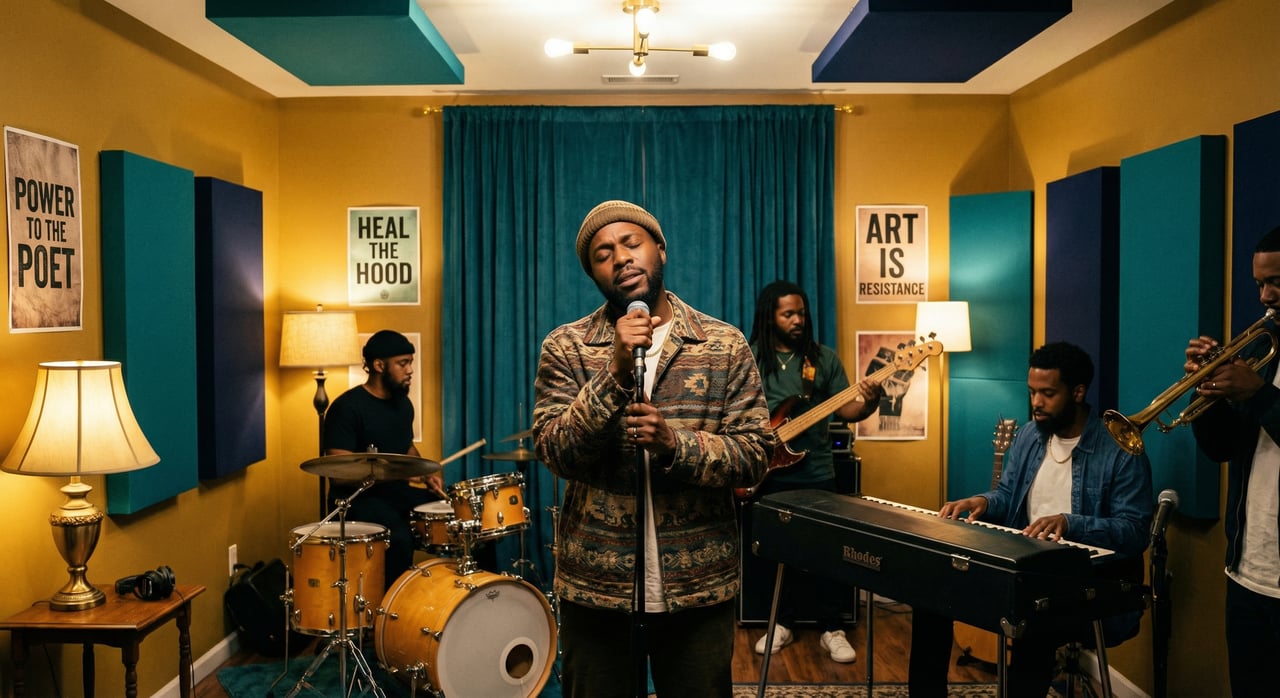
Choose Your Conscious Rap Palette
Mix and match instrumentation styles to create something unique every time.
Urban Jazz
Sax riffs, upright bass, and rimshot drums evoke smoky venues and late-night conversations.
Neo-Soul Groove
Lush chords, stacked harmonies, and silky bass lines that cushion reflective verses.
Spoken Word Fusion
Minimal percussion, atmospheric pads, and reverb-heavy vocals for poetry-first pieces.
Global Conscious
Blend Afrobeat percussion, Latin guitar, or Middle Eastern strings for cross-cultural storytelling.
How to Make a Conscious Rap Track
Describe the Message
Outline the theme, point of view, and emotional arc. Include references to real events or fictional narratives.
Generate the Song
Hit Make My Song. Neume creates the beat, lyrics, vocals, mix, and master in less than a minute.
Remix with Intention
Use Remix to adjust verses, tighten metaphors, or change the hook without losing the arrangement.
Where Conscious Rap Shines
Purpose-driven music can carry documentaries, campaigns, personal projects, and live performances.
Campaign Anthems
Create rally music for social impact initiatives, non-profits, or political campaigns.
Documentary Scores
Pair spoken testimony with beats that underscore the gravity of the subject matter.
Educational Content
Turn history lessons or cultural commentary into memorable musical storytelling.
Personal Healing
Use reflective tracks for journaling, therapy sessions, or mindfulness workshops.
Why Neume for Conscious Rap?
Lyric Density
Prompt for complex rhyme schemes, layered metaphors, or bilingual verses with ease.
Live Instrument Texture
AI recreates organic timbres — strings, horns, percussion — without hiring a band.
Mix That Breathes
Arrangements leave space for vocals, ensuring clarity even with dense lyrics.
Rapid Iteration
Generate multiple drafts quickly, then refine specific sections via Remix.
Royalty-Free Rights
Use your tracks on streaming platforms, films, or stage performances without legal friction.
Build Community Around Your Message
Conscious rap thrives when it is shared. Use Neume's built-in tools to reach people fast.
Host Listening Circles
Share via link or video for private listening parties, workshops, or classroom sessions.
Podcast Chapters
Insert musical interludes between interviews or spoken essays.
Fundraising
Release limited-run tracks supporting causes — the commercial rights are already yours.
Soul, Substance, and Swing
Conscious rap is built on groove-heavy instrumentation and meticulous lyricism. The production leaves air for thought, while the writing focuses on narrative, introspection, or social commentary.
Pillars
- Live-sounding instruments (Rhodes, bass, horns) keep the music organic.
- Boom bap swing or jazzy half-time gives rappers room to breathe between phrases.
- Lyrics prioritize message: storytelling, protest, spiritual reflection, personal growth.
- Hooks often reinforce a mantra or question rather than a party chant.
- Modern conscious rap blends soulful textures with subtle electronic polish.
The lineage runs from Gil Scott-Heron and The Last Poets through Public Enemy, Mos Def, Talib Kweli, Common, Lauryn Hill, Kendrick Lamar, and Little Simz. The connecting thread isn't a particular drum kit or tempo — it's the commitment to substance. Conscious rap sessions start with questions: What am I trying to say? Who needs to hear this? How can the beat support the message instead of overshadowing it?
Classic conscious records leaned on live instrumentation or carefully curated samples. Think of J Dilla's warm, fuzzy mixes for Common's "Like Water for Chocolate" or the lush arrangements Robert Glasper built for Black Radio. Modern iterations add subtle electronic sound design, but the core remains the same: the groove must be human and the lyrics must give listeners something to reflect on.
When you're prompting Neume, describe the instruments that carry the emotion. "Live bass + Rhodes + brushed drums + female gospel hook" builds an entirely different palette than "cinematic strings + analog synth pads + spoken word interludes." Mention the cadence you want: "measured, spoken-word-adjacent delivery" versus "urgent double-time verses with calm hook." Give the AI context ("lyrics exploring surveillance capitalism from the perspective of a community organizer") and it will thread the topic across verses and hooks.
Conscious rap is also about dynamic contrast. Verses can be sparse, giving the vocal prominence, while hooks introduce layered harmonies or call-and-response sections. Bridge sections frequently switch percussion patterns or bring in live solos to mirror lyrical turning points. Neume's Remix feature lets you refine individual sections without tearing down the entire track, so you can iterate on the message until every bar lands.
Prompt Blueprint for Conscious Rap
Context + Perspective
Specify who is speaking and why. Example: 'first-person teacher addressing students after a protest, honest yet hopeful tone.'
Instrumentation
Call out live instruments or sample textures: 'upright bass, dusty drums, warm Rhodes, sax interlude.'
Cadence & Flow
Note the delivery style: 'spoken-word cadence, 88 BPM boom bap swing' or 'melodic rap hook with choral layers.'
Lyrical Devices
Ask for multi-syllable rhymes, metaphors, alliteration, or vivid imagery to keep verses dense.
Structure
Request specific layouts: 'Verse-Hook-Verse-Bridge-Hook' or 'intro monologue → verse → hook → verse → outro mantra.'
Sample Prompt
"Conscious rap, 90 BPM boom bap, live bass + Rhodes + dusty drums, verse from the perspective of a community healer, hook sung by mellow female vocal, lyrics exploring economic justice with hopeful tone, multi-syllable rhyme schemes."
